When Waiting at a Crosswalk Becomes Meditation: A Zen Way to Return to Now
Before you reach for your phone at a red light, try turning those thirty seconds into Zen practice. A concrete way to return to the present moment while standing at a crosswalk.
Is a Red Light Just "Being Made to Wait"?
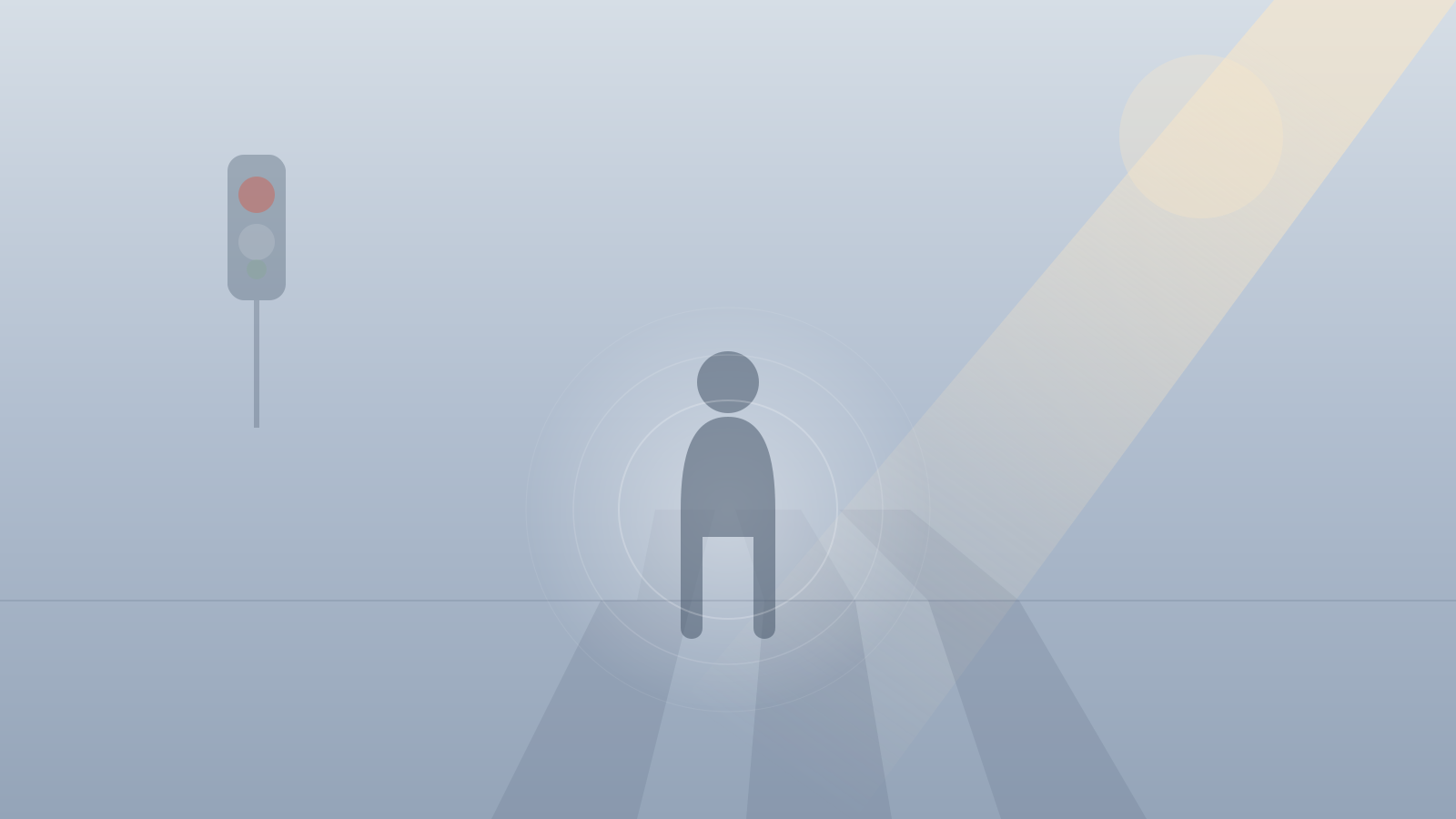
The light turns red as you reach the crosswalk. That tiny event alone is enough to spark a small irritation: "Ugh, missed it." If you're in a hurry, it's worse. And then, almost without noticing, your hand has already slipped the phone out of your pocket.
This sequence has become utterly ordinary in modern life. The thirty seconds at a red light, the twenty seconds waiting for an elevator, the few minutes in a checkout line—we reflexively try to fill these "gap moments" with something.
But from a Zen perspective, that red light is not "time you are being made to waste." Rather, in the middle of a day spent restlessly moving, it is a precious margin the world has offered you, saying: "Pause here."
Zen has the phrase *hoho kore dojo*—"every step is the place of practice." If that is true, then this very moment of stopping and standing still can become a worthy training hall too.
Why Do We Fear the Gaps?
Why do a few dozen seconds of doing nothing feel so unsettling?
Part of it is that we have come to believe "always doing something" is itself a virtue. Idle hands make us anxious. If we aren't absorbing information, we feel left behind. As a result, we paint over even the smallest blank with notifications, news, and other people's posts.
Yet what remains at the end of a day painted over like this is a strange exhaustion. We were busy the whole time, but the heart is not full. In Zen this is called *sanran*—a scattered mind, scattered in all directions.
Glancing at your phone at every red light is nothing less than repeating that scattering dozens of times a day. Put the other way: if you can turn each of those moments into a cue to "return to now," the quality of your whole day becomes something different entirely.
Take "Three Breaths" at the Crosswalk
The practice is very simple. When the light turns red and you come to a stop, instead of reaching for your phone, simply bring awareness to three breaths.
First breath. Notice the feeling of the soles of your feet touching the ground. Feel that your weight is genuinely supported by the earth.
Second breath. As you exhale, let the tension drop from your shoulders. You should feel your hurried mind loosen, just a little.
Third breath. Lift your face and simply take in what's in front of you. The color of the signal across the street, the sway of the leaves on a roadside tree, the flow of passing people. No evaluating, no judging—just seeing what is there.
That's all. And yet, by the time you finish those three breaths, the light will likely have turned green. And you will step forward with a heart that is just a little different from before.
The Morning I Looked Up at a Crosswalk
To be honest, I was for a long time the kind of person who reflexively opened his phone at every red light. Not because there was anything I really wanted to see—just to fill the empty-handed restlessness.
One morning, rushing toward work, I went to look at the screen as usual and, for no particular reason, stopped my hand. That day I happened to lift my face and look at the sky. Morning light, pouring through a gap between buildings, was tinting the wall of the building across the street a soft orange.
It was a road I walked every day. A crosswalk I had crossed hundreds of times. And yet it felt as if that morning was the first time I had truly *seen* that scene. A few dozen seconds of looking up had turned my familiar commute into an entirely different place. That small astonishment has stayed with me ever since.
We believe we are living in "the now," yet we overlook nearly every moment of it. The phone at the red light may be the very symbol of that overlooking.
There Is Value in "Waiting" Itself
In Zen practice, the time spent "waiting" for something is treasured. Seated meditation is, in a sense, a continuous act of simply waiting—not expecting something to happen, but sitting quietly so as to receive whatever arises, just as it is.
Waiting at a crosswalk shares this same structure. We cannot control when the light changes. Willing it to turn green sooner is useless. All we can do is be with the time. And when we accept that "there's nothing to be done about it," the irritation, strangely, settles.
What makes waiting painful is not, in fact, the signal itself, but our own mind insisting "I want to move forward, fast." Zen lets us notice that movement of the mind. Once noticed, waiting stops being painful. It becomes, instead, a stillness we've been given.
Finding "Little Meditation Halls" Throughout the Day
Once you get used to returning to "now" at a crosswalk, you notice you can do the same thing in every part of the day.
The platform where you wait for a train. The kitchen while water comes to a boil. Inside an elevator. The few minutes before a meeting begins. These are all "little meditation halls" the world has offered you. Instead of filling them, just take three breaths and return to now. With that alone, quiet points are placed throughout an otherwise frantic day.
A Zen monk's life looks quietly composed not because they are in some special place, but because they treasure the gaps of daily life as gaps. In our own lives, those gaps are countless. The only difference is whether we fill them with a phone or savor them with the breath.
Crossing on Green with a New Heart
The next time you come to a stop at a crosswalk, try to remember: that red light is not holding you back—it is opening a door for you to return to "here and now."
Leave the phone in your pocket and breathe three times. Feel the soles of your feet, soften your shoulders, lift your face. With nothing more than that, the thirty seconds at a red light become the quietest, richest moment of your day.
And when the green light comes on, step forward with a heart a little lighter than before. "Here and now" is not located in some distant training hall. It is always right there—on the very crosswalk where you are standing.
About the Author
Zen Insightful Editorial TeamWe share Zen teachings in a way that is easy to understand and applicable to modern life.
View author profile →Related Articles
What Loss Finally Lets You See: The Zen Teaching of Emptiness in Grief
Turning a Parent's Criticism into a Koan: Zen Wisdom for Difficult Family Relationships
Deep Focus Through Simple Repetition: The Zen Art of Boring Arithmetic
Chasing the Benefits of Zazen Is Why You Quit: What Shikantaza Teaches About Sitting Without Trying to Gain Anything