Three Breaths Before an Online Meeting: A Zen Way to Settle Yourself Before Hitting 'Join'
Three minutes until the next meeting. You open the deck while pouring coffee and hit 'Join' without a pause. Three quiet breaths before that click can change how the whole call lands—a small practice borrowed from a monk's breath at the threshold of the meditation hall.
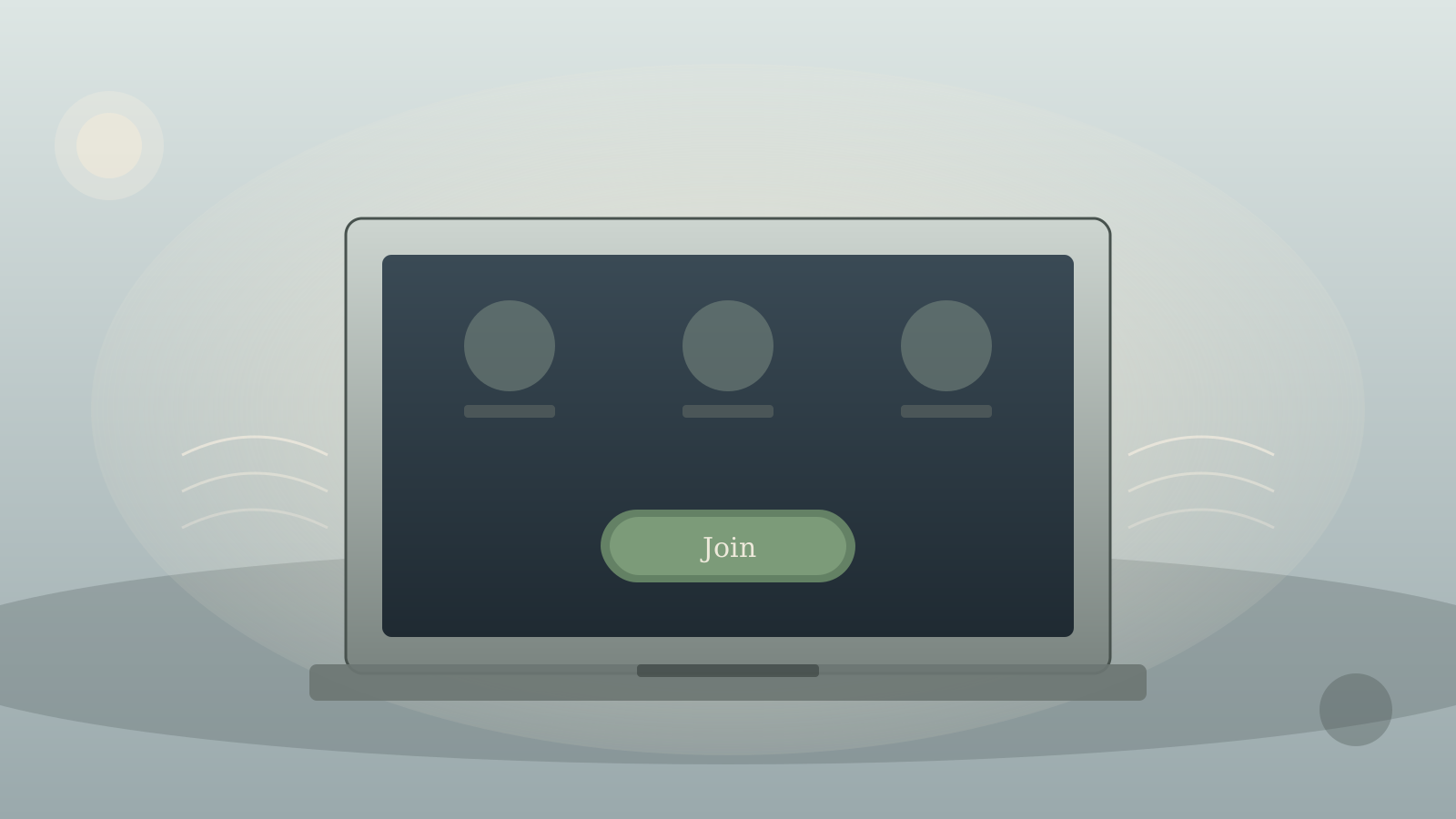
Between Meetings, the "You" Slowly Disappears
In the era of remote work, we click 'Join' many times a day. Ten to eleven, eleven to twelve, one to two—our calendars become rows of colored blocks with paper-thin gaps between them. The words from the last call, the unresolved item, someone's unhappy expression still echoes in our head as the next meeting window opens. Before we know it, there is no moment left to check how we actually feel in this room. In Zen, before entering the meditation hall, a monk bows, settles the body, and steadies the breath. This is called chōshin (body), chōsoku (breath), chōshin (mind)—the threshold practice that opens every other practice. For centuries, monks have known that when the body and the breath are in order, the mind quietly follows. Before our finger touches 'Join,' we can compress these three steps into under a minute.
Why "Before" the Click Is the Only Moment
Most of us only notice during the meeting that part of our head is still in the previous one. But once the camera turns on and someone starts speaking, there is no margin left to settle ourselves. The only window is the few dozen seconds before the screen fills with faces and someone shares their deck. The few seconds a monk spends bowing at the entrance to the hall is itself a practice—a "preparation practice" that supports the practice to come. In the same way, three breaths before 'Join' become the ground that holds the next hour. Only three—if a breath is seven seconds, twenty-one seconds total. Less than a sip of coffee. Yet whether you have those twenty-one seconds or not, the quality of the hour that follows changes more than you would expect.
The Practice: Three Breaths Before You Click
The first breath is the breath that returns the body to the chair. Set aside the previous meeting, the unread reply, the running monologue in your head, by returning to the body. Let your back meet the chair, let your feet meet the floor, let your shoulders drop. Breathe in slowly, breathe out slowly. The second breath is the breath that pictures the people you are about to meet. Bring each attendee briefly into mind. Who is there, and what is their day likely to be like, as far as you can tell. Not in judgment or expectation—just an acknowledgment: "I am about to share an hour with these people." The third breath is the breath that returns to the purpose of the meeting. Why am I in this room? What do I want to decide, what do I want to learn? If you can say it in a single line, say it inside. After the third breath, roll your shoulders once, and then click 'Join.'
Escaping the "Right After" Trap
On days when meetings are stacked five minutes apart, you may feel there is no room for three breaths. But these are exactly the days when three breaths matter most. I once had a morning with four back-to-back calls. By the second I was already drained; by the third I could no longer track what was being asked of me. I opened a social feed in panic, thinking it was a break, and my head only grew noisier. Before the fourth, almost by accident, I looked away from the screen, sat back in the chair, and took three deep breaths. That was all. In the fourth meeting, words returned to being words I could hear. Unlike the previous three, where sound just streamed past, the intent behind people's sentences began to reach me again. Three breaths are not rest. They are the shortest practice for taking the next hour back into your own hands.
A Bow at the Screen: Adjusting Camera and Microphone
In Zen, chōshin is not merely straightening posture. It is shaping, through the body, the inner readiness to face what is coming. There is a parallel before an online call. Look at yourself in the camera preview once. If your expression looks foggy, soften the space between the eyebrows. Check your microphone position, and move whatever is visually noisy on the desk out of the frame—a water bottle, a stack of papers. This is not about looking impressive. It is the body's way of confirming "I am here, now." In essence it is the same as a monk adjusting the collar of the robe before stepping into the hall. When small actions settle, the mind settles a little too. It does not have to settle all the way. The very intention to settle changes how you enter the meeting.
Letting the Three Breaths Become a Cue
You do not have to perform the three breaths consciously every time. Eventually, the very shape of the 'Join' button becomes the cue. The moment your cursor hovers over that blue button, your chest naturally rises with one deep inhale. Once that becomes habitual, you receive twenty seconds of practice, for free, many times a day. Zen practice does not deepen only through long, special sessions. It deepens by embedding small forms into the seams of ordinary life. Between meetings, between screens, between yourself and another person—seams are exactly where the mind tends to scatter. So we place three breaths at the seam. That alone changes the kind of fatigue you carry into the evening. Before your first meeting tomorrow, just before your finger lands on 'Join,' pause for twenty seconds. When the call begins, you will probably notice that a "you" is genuinely seated inside the room.
About the Author
Zen Insightful Editorial TeamWe share Zen teachings in a way that is easy to understand and applicable to modern life.
View author profile →Related Articles
Rearranging What's in the Fridge: How Picking Up One Item at a Time Brings Deep Focus
On the Nights No Reply Comes: How Zen's Teaching of Emptiness Eases the Silence After Read
One Breath Before the Vending Machine: How Three Seconds Before You Choose Brings You Back to Now
Pause the Moment You Step Off the Escalator: How Beginner's Mind Turns the Familiar Into the First-Time