Three Seconds at the Doorstep: A Small Zen Practice for the Edge Between Outside and Inside
When we step out of our shoes at the door, we often drag the whole outside world inside without noticing. Drawing on the Zen phrase 'look beneath your feet,' this piece shows how three seconds at the threshold can keep the day's fatigue from following you into the house.
The Doorway Has Stopped Being a Threshold
You finish work, ride the last train, stop at the convenience store, and finally open the door of your home. You turn the key, kick off your shoes, and walk down the hall with your eyes still on your phone. For many of us, the entryway has become merely a place we pass through. Yet originally, the doorway is one of the most important thresholds of the day. The outside self and the home self. The self that wears a role and the self that does not. The self that was tense and the self about to relax. The entryway divides them, and the act of taking off shoes is the symbolic crossing of that line. At the entrance of many Zen temples hangs the phrase kyakka shōko—'look beneath your feet.' Not the distant ideal, but the very ground you are standing on, right now. That single line, placed at the entrance, turns the few seconds of removing shoes from automatic motion into practice.
What Is Actually Happening as You Step Out of Your Shoes
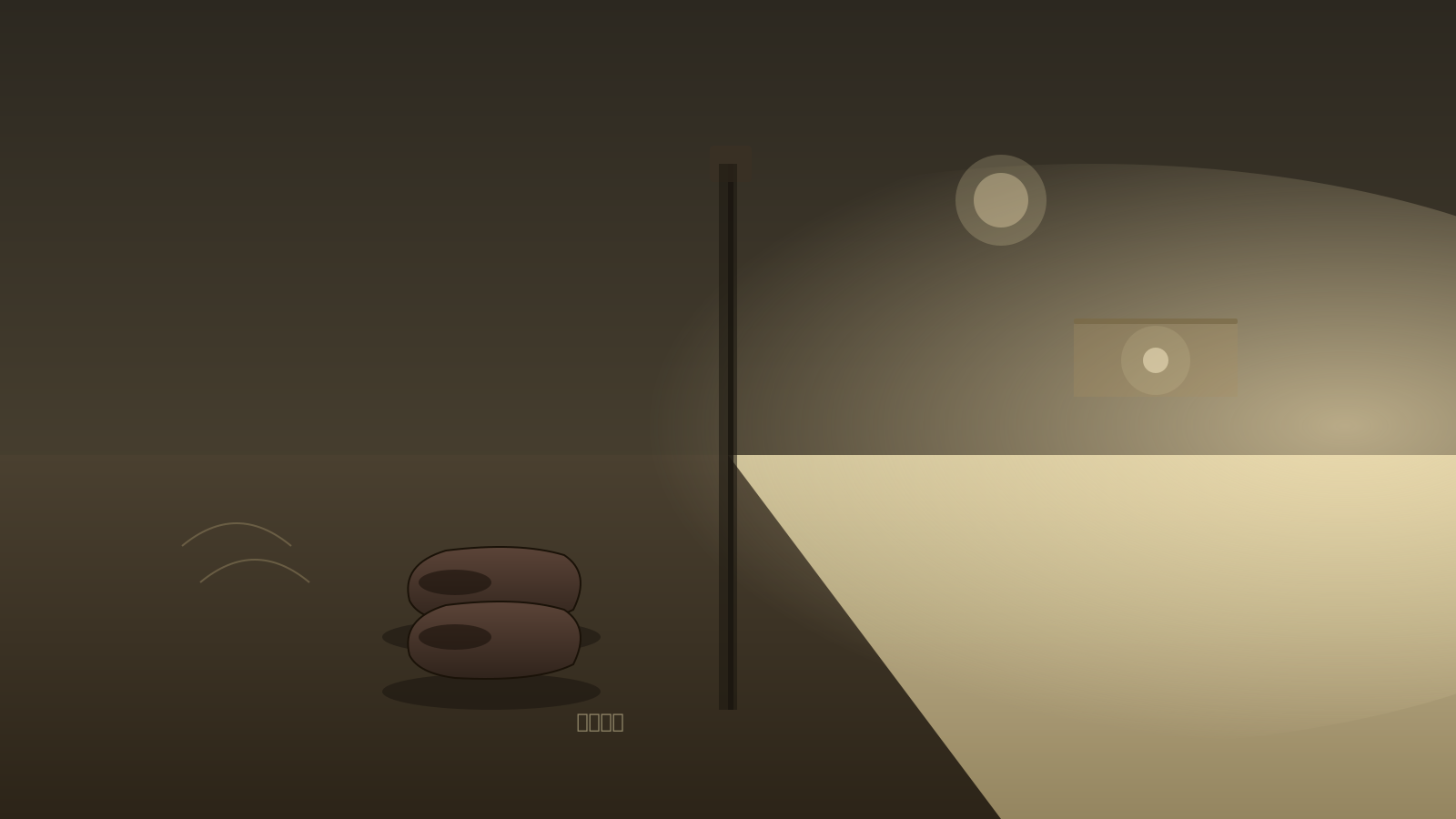
Replaying the rest of your workday in your head, you half-automatically slip out of your shoes. You look down and one is aligned, the other lies sideways. This is not about appearances. It is an honest mirror of the mind. When we kick off our shoes, only the body has come home; the mind is still in a meeting room or on the train. That is why the small effort of aligning them is the first thing we skip without realizing. Conversely, the three seconds it takes to place your shoes side by side carry the quiet confirmation, "my mind has come back here, too." In Zen training, aligning your footwear has always been one of the most basic practices. New monks are not first taught how to sit zazen or chant sutras—they are taught how to line up their sandals at the entrance. The object being aligned is footwear, but Zen has long understood that what is really being aligned is the self.
The Practice: Three Seconds at the Threshold
The first gesture is to remove your shoes one foot at a time, gently. Don't crush the heel and slip out; let one hand briefly touch the shoe and lift each foot. It sounds like a fuss, but it is only a few extra seconds. The second gesture is to set the shoes side by side with the toes pointing back toward the door. This is not for show. It is a small preparation for the self who will leave again tomorrow. Today's self leaves a quiet gift for tomorrow's. The third gesture is to glance down at the aligned shoes for one second. As kyakka shōko teaches, look beneath your feet. Then, inside or out loud, say briefly, "tadaima." Out loud or silent, alone or not—this is a "tadaima" to yourself. Three small gestures, three seconds total. That is enough to turn the doorway from a passage back into a threshold.
Don't Bring 'While I'm at It' Across the Threshold
The biggest enemy of the three-second practice is the phone. You glance at notifications as you take out the key, peek again while removing your shoes, and keep walking down the hall with the screen open—until the whole evening passes with you still connected to the outside. One winter night I caught myself replying to an email at the entryway, coat still on, one shoe off and one shoe on. When I finally looked up, I had been standing in that in-between place for ten minutes—not outside, not inside, just stuck. From that day, I made one decision: the moment I turn the key, the phone goes back into the pocket. The reply can wait. After three seconds at the door, then I can take the phone out slowly. Just keeping the screen out of the doorway changes the air inside the house.
Who Is the 'I'm Home' For
If you live alone, no one is waiting to hear "I'm home." Even with family, they may be asleep. Still, it is worth saying it—aloud or inside. This greeting is not directed at anyone else. It is a small ritual in which you confirm to yourself, "I have returned here." In Zen this kind of inner ritual is sometimes called jishō, self-verification. Without anyone else proving it for you, you confirm your own presence in this place. The doorway "tadaima" is the simplest form of jishō. When I first started living alone, I felt awkward speaking to an empty apartment. But once, as an experiment, I aligned my shoes, bowed slightly, and softly said "tadaima." Something quiet happened. The room stopped being just space and became my place again. Three seconds and one word are enough to turn a house into home.
Three Seconds That Change Both Evening and Morning
Once the three-second habit settles, the time inside the house begins to shift. The unfinished tone of the workday no longer follows you into cooking dinner. The day's incidents are less likely to replay in your head before sleep. This is not exaggeration. Whether you treat a threshold as a threshold determines what is allowed to count as "finished" inside the mind. In the morning the practice works in the opposite direction. Before you leave, stand at the door once with your shoes on, take one slow breath. That alone makes the shift from home self to outside self a little gentler. Zen does not confine practice to special places or special times. It places small forms at the seams of ordinary life, so that each crossing becomes a chance to settle the heart. The doorway is a seam we cross at least twice a day. When you come home tonight, put your phone away, set your shoes side by side, glance down at your feet for one second, and quietly say, "tadaima." The very first step into the hallway will, I think, feel a little different than it did before.
About the Author
Zen Insightful Editorial TeamWe share Zen teachings in a way that is easy to understand and applicable to modern life.
View author profile →Related Articles
Three Breaths Before an Online Meeting: A Zen Way to Settle Yourself Before Hitting 'Join'
Rearranging What's in the Fridge: How Picking Up One Item at a Time Brings Deep Focus
On the Nights No Reply Comes: How Zen's Teaching of Emptiness Eases the Silence After Read
One Breath Before the Vending Machine: How Three Seconds Before You Choose Brings You Back to Now