Three Minutes With the Steam Above Your Coffee: A Small Morning Pause Zen Teaches Us
Just three minutes spent watching the steam rise from your morning coffee can change the entire shape of your day. Discover why, through Zen's teaching of "this very moment."
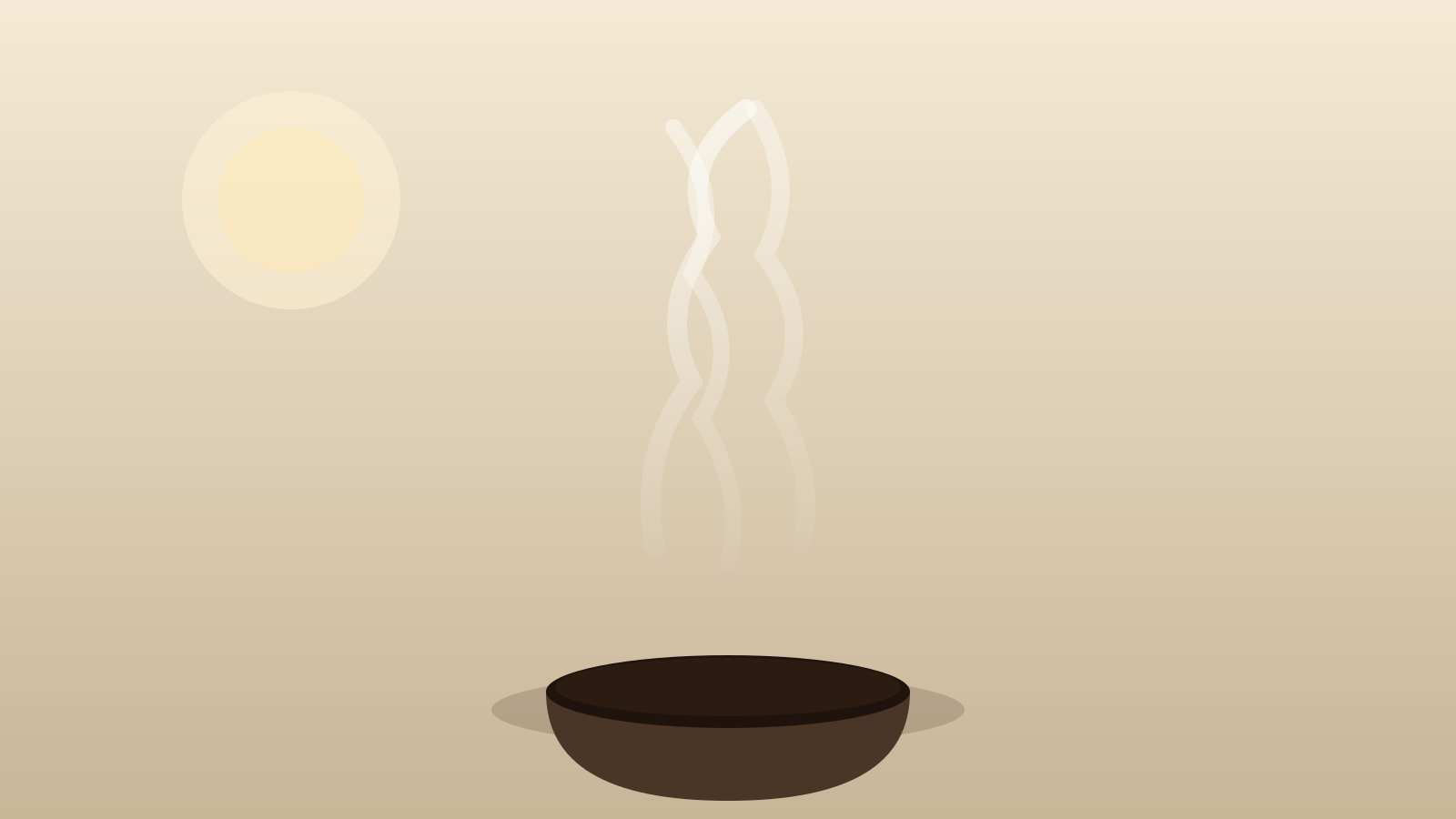
Why Steam? Resting Attention on the Formless
Zen practice often turns toward formless things—the sound of wind, the smoke of incense, ripples on water, and steam. What unites them is a fragile quality: the moment you try to grasp them, they vanish. Things you can hold tighten the grip of "ownership" inside you. Things like steam, which slip through fingers when you reach for them, can only be watched and released. This makes steam an ideal entry point into Zen's teaching of non-attachment. And steam appears reliably every morning—no special tools, no special place. Coffee, tea, even hot water—any single cup will do. "Make the practice hall out of daily life." That has always been a quiet refrain among Zen monks.
What Three Minutes Actually Does to the Brain
Don't underestimate three minutes. Research in attention shows that even a few minutes of slow, conscious breathing can shift the autonomic nervous system from sympathetic dominance toward parasympathetic recovery. Mindfulness researcher Jon Kabat-Zinn has often said that meditation isn't only the long sit—small, intentional pauses dropped into a day can do remarkable work for body and mind. Three minutes is short enough to fit even a hectic morning, and long enough to land somewhere. I'll admit: there were stretches when I would wake up, reach for my phone three or four times, and feel exhausted before the day had begun. One morning, simply too lazy to walk across the room for the phone, I sat in front of my coffee and did nothing. The calm that followed those three minutes through the rest of the day surprised me, and I remember it still.
The Practice: Three Minutes Watching the Steam
The steps are almost embarrassingly simple. First, brew coffee as you normally would. Second, put your phone in another room or place it screen-down. Third, set the cup slightly below eye level, sit upright in a chair. Fourth, simply watch the movement of the steam. Don't analyze its shape or comment, "how lovely." Fifth, breathe slowly in through the nose, out a touch longer through the mouth—gradually letting your breath align with the rhythm of the rising steam. Three minutes will feel longer than expected. Thoughts will arise. "What about that report." "I should drink it before it cools." Zen does not fight these thoughts. You simply notice—"ah, thinking"—and return to the steam. Repeating this returning, dozens of times if needed, is the practice itself.
What Steam Teaches: Nothing Stays the Same
Watch carefully, and you'll notice something strange: the steam never holds a shape for even a second. It rises, sways, dissolves. The next moment brings a wholly different flow. Buddhism calls this truth impermanence—everything is in motion. We understand it intellectually, but in the heart we quietly assume tomorrow will look like today. Watching steam gently shakes that assumption loose. This morning, like the steam, will never repeat in exactly this form. When that lands as felt experience rather than concept, the coffee in front of you, the family in the next room, the work waiting on the desk—all begin to look slightly different. The "ordinary" morning reveals itself as a one-time-only morning.
Three Ways to Meet a Wandering Mind
First-time practitioners almost always feel discouraged by their wandering minds. But wandering is not failure—it is raw material for awareness. The first technique: label the thought "thinking." The instant you recognize a thought as a thought, you shift from being inside it to observing it. The second: return to the senses. Feel the warmth of the cup in your hands, take in the scent of coffee through your nose. The five senses only operate in the present, so returning to sensation automatically returns you to now. The third: don't scold yourself. Calling yourself "bad at focusing" simply spawns a new attachment. Just acknowledge gently—"glad I noticed"—and come back to the steam. That's the whole technique.
How a Three-Minute Habit Threads an Axis Through Your Day
When you place three minutes of stillness at the start of a day, a small axis runs through every later moment. Before a meeting, you find space for one breath. In a frustrating exchange, you can pause for half a beat. At night, even a busy day carries the quiet satisfaction: "the morning three minutes really happened." Master Dogen, in his Tenzo Kyokun, taught that washing a single grain of rice or stirring soup once is itself practice. Watching steam for three minutes is the same posture as a cook attending to a single grain. There is no need to aim at grand awakening. Simply have, somewhere in your day, three minutes during which you are unmistakably here. That accumulation, almost without your noticing, will reshape the texture of your days—and eventually your life.
And if even three minutes feels impossible on some mornings, one breath is enough. Place your awareness in the single moment as steam rises and disappears once. That brief instant carries the whole of what Zen masters have polished for centuries—the wisdom of "this very moment." Coffee is not only for drinking. Through the rising steam, every morning it asks you a quiet question: "Are you really here right now?" Tomorrow, try answering with three minutes of watching the steam.
About the Author
Zen Insightful Editorial TeamWe share Zen teachings in a way that is easy to understand and applicable to modern life.
View author profile →Related Articles
Paper and Pen Are Enough: How Zen's Simplicity Frees You from Digital Excess
Do You Actually Taste Your Bread? How Zen Awareness Transforms the Simplest Meal
Has Anyone Seen the Moment Water Boils? A Zen Koan on the Illusion of Boundaries in Change
Watching Your Own Shadow: How Zen Awareness Teaches You to Dialogue with Your Other Self