Cooking for One as Zen Practice: How the Tenzo's Spirit Turns 'Just Me' Meals into Deep Focus
Transform cooking for yourself from a chore into a focused Zen practice rooted in the spirit of the tenzo. Discover why meals made for nobody but yourself hold a quiet, deep power.
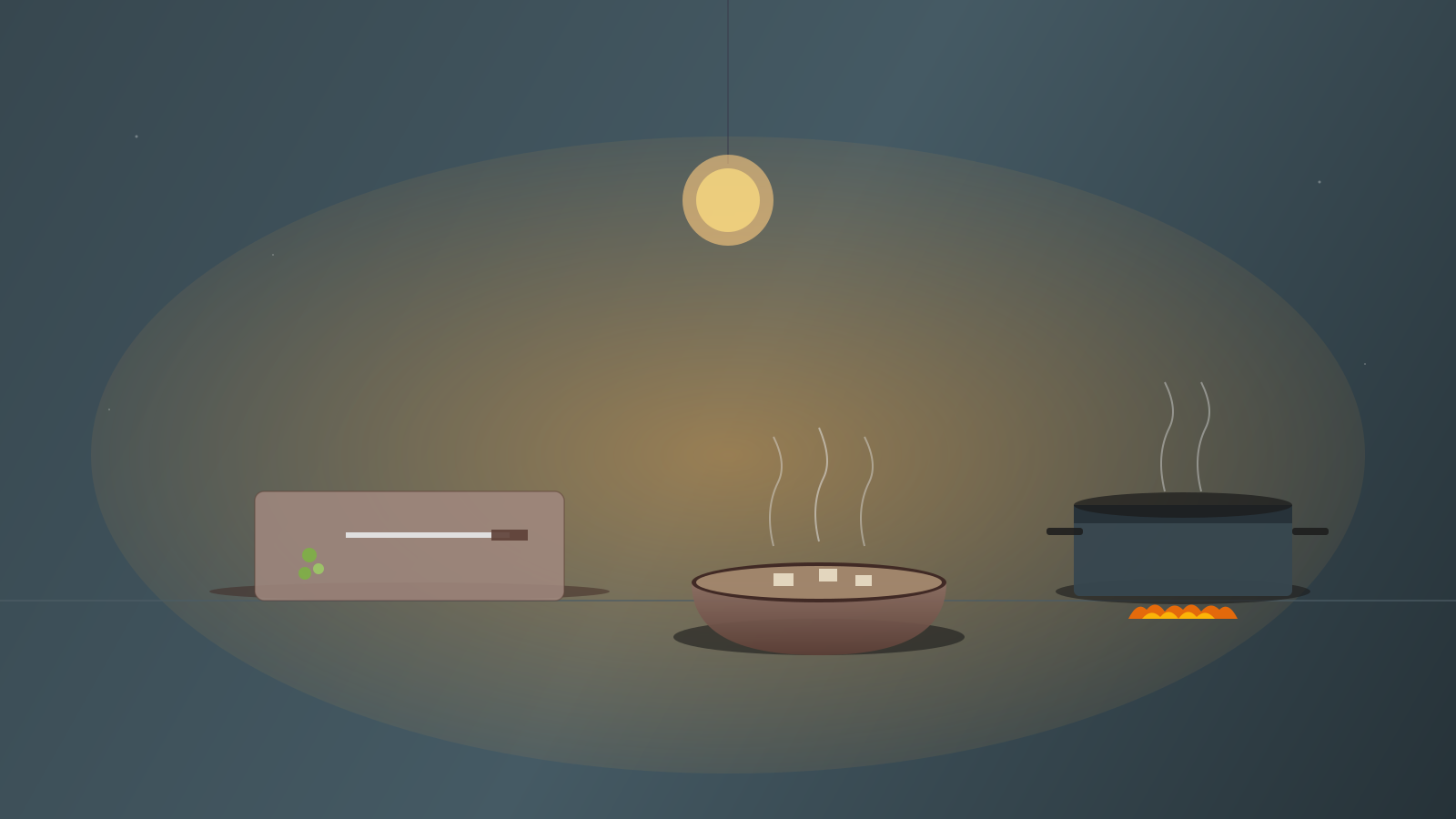
'Cooking Just for Me' Is the Easiest Place to Cut Corners
When we cook for someone else, our backs naturally straighten. A child's lunchbox, dinner with a partner, hospitality for a guest — just picturing the recipient's pleased face makes the rhythm of the knife a little more careful. The instant the night becomes 'just me,' though, shortcuts begin. A convenience-store bento, frozen food, instant noodles, a rice ball eaten standing up. Nobody is watching, so this is fine. Many people living alone know that feeling.
From a Zen perspective, this 'cooking only for myself' is the greatest field of practice. How a person behaves when no one is looking is who they really are. In Tenzo Kyokun (Instructions for the Cook), Master Dogen of the Soto school carefully laid out the responsibilities of the tenzo, the monk in charge of the temple's meals. His teaching was that practice lies not in who eats but in how the food is made. Cooking for one at home is the closest modern echo of that tenzo training.
Three Hearts From the Tenzo Kyokun
Dogen named three hearts the tenzo must carry: kishin, roshin, and daishin.
Kishin, joyful heart, is the heart that delights in being able to cook at all. For oneself is fine. To wash rice, cut vegetables, set a pot on the flame — the very fact of being allowed to do these is good fortune. Ingredients arrive; fire is available; water flows. None of it is owed to us.
Roshin, parental heart, is the fine attentiveness with which a parent cares for a child. Not wasting a single grain of rice, not throwing away a vegetable's edge carelessly, handling each piece gently. Not 'because I'm alone, anything goes,' but the inverted thought: 'because I'm alone, all the more carefully.'
Daishin, great heart, is a wide, unattached heart. Work with what you have. Do not be bound by a fixed menu. Do not judge whether tonight's taste came out well. 'Tonight I make this with what's in the fridge' — quietly enough.
No recipe book or cooking class teaches the three hearts. Yet alone in your kitchen, with no one watching, you of all people can choose them.
Five Gestures That Turn a Solo Meal into Practice
Nothing difficult. Five gestures you can begin tonight.
One, wipe the cutting board. Before you start cooking, wipe the surface once with a clean cloth. Wipe it even if it isn't dirty. This is a purifying gesture, a signal to your own heart that 'kitchen time begins now.'
Two, focus on the very first cut. Whatever the first vegetable — onion, cabbage, anything — listen carefully to the first sound of the knife. The 'tok' of the blade, the vibration carried through the board, the snap of fibers. Just for the first cut, place attention there. Three seconds is enough.
Three, watch the flame. Once the burner ignites, gaze at the flame for three seconds. The gradient of blue and yellow, the wavering motion. Fire is humanity's oldest meditation object, faced for thousands of years. One short look returns the mind to here and now.
Four, build in one slightly elaborate step. Make dashi from scratch, decorate the cut of a vegetable, mince your own garnish. Anything will do, only one. That single step is the visible mark of the decision 'even just for myself.'
Five, take one breath before plating. The moment you plate, judgments about appearance start. Insert one slow breath, set evaluation aside, then arrange. Once plated, gaze at the scene on the plate for five seconds. This is a meal that exists nowhere else in the world, made tonight only for you.
What Changed When I Switched to 'One Soup, One Side' for Myself
In the past, when I came home from a business trip, I would always grab a bento at the convenience store on the way. I'd eat in front of the TV in an empty apartment, even leaving the bento's lid lying on the desk. I called that 'efficient living.'
One spring night the bullet train was delayed and I had no energy left to stop at the convenience store. Opening my fridge, I found only some wilting komatsuna, a block of tofu, and miso. So I made what was effectively one bowl of miso soup with tofu and called it dinner. It had been a long time since I had stood in front of my own cutting board, and the very first sound of the knife startled me — I had not realized how long I had gone without even hearing that sound at home. When I sat down with the steaming bowl, a strange calm spread in my chest that the bento had never given me. It was not about taste. It was the simple fact that 'tonight I prepared this meal for myself' filling the heart. Since that night, I decided that on the nights I was alone, even just miso soup would be enough — I would cook.
'Efficiency' and 'Practice' Are Not Enemies
'Zen cooking' might sound like spending hours every night on elaborate dishes. The opposite is true. Ichiju issai — rice, miso soup, and one small side of pickles or vegetables — is enough. The Japanese cook Yoshiharu Doi made exactly this point in his proposal that 'one soup, one side is fine,' a perspective in deep resonance with the Zen spirit of food. Frugality and care do not contradict each other. In fact, a simple menu makes it easier to bring attention to each gesture.
On busy days, cooking rice, making miso soup, and adding a single side of natto is enough. Fifteen minutes of work — yet if inside those fifteen minutes you wipe the cutting board, watch the flame, and breathe before plating, the quality of the evening becomes a completely different thing. Efficiency and practice are not enemies. Even within the shortest time, a place for the heart can be reserved.
The 'Other Practice' After Eating
In Zen meal etiquette, the cleanup after eating is taken every bit as seriously as the rituals before. Washing the bowl is itself practice, and the proper form even drinks the last drop of water from the rim of the bowl before wiping it dry.
For a single person at night, cleanup is the toughest hurdle. We leave the pot in the sink, telling ourselves the dishes can wait until morning. But the three minutes spent washing dishes right after eating becomes the day's greatest kindness to yourself. The feel of the bowl's edge under your finger as warm water runs over it, the sound of the soap bubbles dissolving, the final motion of wiping the rim with a cloth. Only when you include this step does the practice of cooking-for-one truly complete itself.
Prepared for nobody but yourself, cleaned up by nobody but yourself. Continue this quiet circuit night after night and, oddly, the way you treat the person called 'me' begins to shift. The self that used to be 'someone who can eat anything' slowly becomes 'someone worth preparing a meal for.'
A Few Tips to Keep This Practice Alive
A few small tricks to root this solo cooking practice in everyday life. First, decide that 'it doesn't have to be every day.' Three nights a week is fine. Separating the cooking nights from take-out or dining-out nights actually raises the quality of the cooking nights. Second, give yourself permission to repeat the same menu. If Monday is always miso soup, rice, and natto, the fatigue of choosing dies down and attention is freed for the gestures themselves. Monastery meals, too, are structured around seasonal repetitions. Third, before leaving the kitchen, say a small 'good work' to yourself. This is an important gesture. Precisely on the nights when you cooked for nobody and no one will praise you, you add the one word of care from yourself to yourself.
The deepest truth the tenzo teaches is perhaps not culinary skill at all, but the heart that refuses to treat oneself carelessly. Stand in your kitchen alone tonight. Inside one humble bowl of soup and one side dish, a deep practice and a real comfort are waiting.
About the Author
Zen Insightful Editorial TeamWe share Zen teachings in a way that is easy to understand and applicable to modern life.
View author profile →Related Articles
The Meditation in Fastening a Button: How a Tiny Morning Gesture Reshapes Your Whole Day
The Zen of Turning Off Lights One by One: A Subtraction Ritual That Quietly Closes the Day
The Beauty of an Old Wooden Spatula: Wabi-Sabi in One Tool Used for Years
Awareness of Both Elbows: How an Overlooked Joint Quietly Brings the Mind Back to Earth