Bringing in the Laundry at Dusk: A Quiet Samu That Gently Closes the Day
We talk about meditative hanging and meditative folding, yet rarely about the few minutes spent bringing in the laundry at dusk. Unhooking each piece under the deepening sky is structurally close to Zen samu, and it returns a quiet pause to the seam between the day and the evening that follows.
We Talk About Hanging, but Forget the Bringing-In
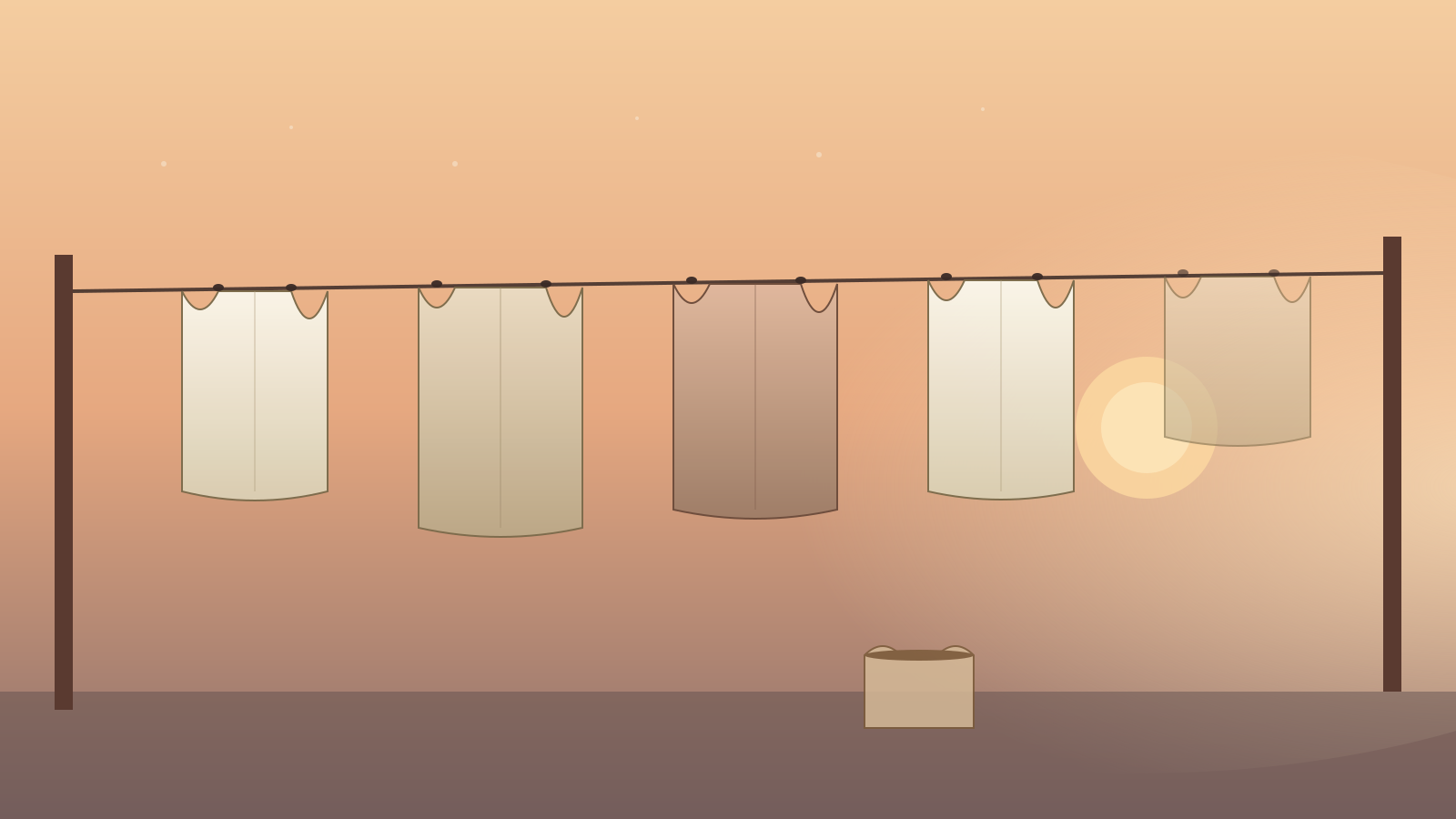
When Zen and housework meet, hanging laundry is often described in meditative terms. The practice of clipping each piece while returning to the present is widely shared. The few minutes spent bringing the laundry back in at dusk, however, are seldom mentioned. The same fabric we hung with care in the morning gets pulled down in a hurry by evening, dumped in a heap on the couch, and forgotten until night. For most of us, bringing in laundry is simply 'clearing up,' not something to savor. And yet these few minutes at dusk carry the structure of Zen samu—working practice—almost perfectly. A concrete object (one piece of cloth), a clear beginning and end (from a full line to an empty one), and direct contact between hand and fabric. All three are there. A small practice with all the right ingredients sits outside the door each day, and most of the time we walk straight past it.
Another Quiet Seam at the End of the Day
Zen-shaped life has small seams placed all through the day. The morning bell, the bows before and after meals, the joined hands before sleep. Each is a tiny ritual that says, 'Here, stop for a moment.' Modern life has very few such seams. We check our phones the instant we wake, stay on screens between work tasks, and stare at screens again after coming home. A day without seams looks efficient on paper, but the heart stays thinly tense the entire time. Bringing in the laundry is a candidate for one more quiet seam, placed exactly where one is missing. You stand in front of the line. The sky has shifted from blue to a soft amber edged with gray. The air is slightly cooler than this morning. Your position and the air themselves form a seam between the afternoon and the evening. Bringing in laundry is what lets you feel that seam through the body, not just in the mind.
The Practice: Take Each Piece with Both Hands
Turning this time into samu requires no special tools. First, before stepping up to the line, take one breath. It doesn't need to be deep. Just a short breath that tells you, 'I'm about to bring this in.' Second, decide which end you'll start from—left or right—and commit to it. Don't pick from random places along the line. This is a tiny form of what Zen calls ichiji-ichiji, one moment, one matter. Third, use both hands for each piece. Stop the habit of unclipping with one hand and yanking the cloth down with the other. Unclip with both hands and receive the cloth with both hands. The difference looks small, but using both hands keeps the body's center line steady, and the hurried mood naturally subsides. Fourth, fold the piece lightly on the spot before placing it in the basket. It doesn't need to be a full fold. Halve a sheet, match the shoulders of a shirt—enough that it lies flat. Save the proper folding for another time. The goal here is to finish only the act of bringing in. Fifth, after the last piece comes down, look at the empty line for a moment. This pause matters. If you skip the sight of work completed, the work itself doesn't quite settle in the heart.
The Hand Reads the Day Through Temperature
As the minutes deepen, awareness arises on its own. The temperature of fabric tells you, very honestly, what the day's weather was like. On a clear, sunny day, the warmth of midday still lingers deep in the cloth, rising softly into your palm. On a cloudy day, the surface is dry but a damp chill remains at the core. On a windy day, the fabric carries a fine tension across its face. None of this is information the weather forecast can give you. Zen has a phrase, 'to know through the body.' Knowing through the body—rather than only through the head—is treasured. Bringing in laundry is a few minutes of relearning today's weather through your palms, not your head. For a day spent mostly at a desk or in a car, where weather was background noise, this practice quietly mends the thread connecting you with the natural world.
One Dusk, Standing Before a Half-Dry Shirt
One evening, with somewhere to be, I stood for a while before a shirt that was still half-dry. I had wanted everything fully dry. I wanted to bring it in fast, fold quickly, and get back to packing for the outing. But the back of the shirt was still heavy, and a damp coolness clung to it. For a moment, irritation began to rise. Why, of all days, isn't it dry? I stopped my hand, returned the shirt to the line, and re-stretched it gently. I decided to bring in only the rest and move the damp one indoors. The instant I decided that, the hard need to 'keep to schedule' that had been pressing inside my chest let go. I did leave a little late. But the lateness was smaller than I had feared, and when I came home, the sight of the shirt hanging quietly indoors, now dry, undid the day's tiredness in a way I still remember. The half-dry shirt turned a dusk that 'had to go to plan' into a dusk that no longer needed to.
A Few Minutes That Create an 'After'
When you finish and lift the basket, there is a clear ending. The line is empty; your hands hold the bundle of cloth that spent the day under the sun. Having a real 'after' surprisingly steadies the heart at dusk. Work refuses to end as long as emails arrive. Housework just changes shape and reappears. That is exactly why even one task with a definite ending matters. A task that ends draws a line in the mind the moment it ends. You step back inside, set the basket down, wash your hands. Then you might sit briefly and brew a cup of tea, or begin the dinner prep. But this 'tea' or 'prep' is no longer an extension of the afternoon—it is the start of a new time called evening. With just one seam placed, the same dinner prep begins in a noticeably calmer mood.
The Structure Holds on Rainy and Indoor Days, Too
Not every day allows you to dry clothes outside. Rainy seasons, winter, long trips—there are plenty of days when there is no physical 'bringing in from outside.' The structure of this samu still works indoors. When pulling clothes from an indoor rack or a bathroom dryer, don't rip them all off at once. Take each piece with both hands, smooth it lightly, and place it in the basket. When done, look at the empty rack and take one quiet breath. That alone re-creates the dusk seam, indoors. In fact, without the outdoor scene, sensitivity to fabric temperature, dryness, and the motion of your own hands can grow even sharper. Zen is not bound to place. Whether the line is outside or in a bathroom, the moment of reaching gently for one piece of cloth carries the same weight.
This Evening, Don't Rush It
Bringing in the laundry is an utterly ordinary chore present in nearly every home. That is precisely why placing a small samu here lets hundreds of gentle seams—and, over years, thousands—quietly accumulate in your life. Carving out time for zazen is difficult. But time for bringing in laundry is already on your calendar several times a week. The next dusk you stand before the line, instead of grabbing everything at once, try one breath first. Start from the left, one piece at a time. Both hands on the clip, both hands receiving the cloth, a light fold, into the basket. Look at the empty line for just a few seconds. That alone creates a small, firm, invisible seam between a busy day and the night ahead. Over the long run, the hours Zen monks spent wiping monastery corridors and the minutes you spend at the line at dusk probably do, in their quiet way, very similar work.
About the Author
Zen Insightful Editorial TeamWe share Zen teachings in a way that is easy to understand and applicable to modern life.
View author profile →Related Articles
Wiping Houseplant Leaves, One by One: A Quiet Samu That Slowly Settles the Heart
Three Seconds at the Doorstep: A Small Zen Practice for the Edge Between Outside and Inside
Three Breaths Before an Online Meeting: A Zen Way to Settle Yourself Before Hitting 'Join'
Rearranging What's in the Fridge: How Picking Up One Item at a Time Brings Deep Focus